
Sort by:

Why are we so divided today? Paradoxically, Howard Ross, author of Everyday Bias, says it's our compulsion to belong to a group--something hardwired into us-- that ends up making us deeply connected with some, yet deeply divided from others. Ross shows how we can overcome this growing tribalism.
We are living in a world of almost unparalleled separation. People are no longer disagreeing, but are instead disavowing each other's rights to an opinion. What is driving this polarization, and how can we overcome it? Howard Ross says that ironically it's our profound need to belong. He delves deeply into the powerful psychological, neurological, and biological forces that drive us to want to identify so strongly with a group we're sometimes even willing to sacrifice our individual identity.
Drawing on his decades of leadership in the diversity and inclusion field, Ross probes the depth and impact of this growing tribalism, the role social media plays in exacerbating it, the ways it impacts every aspect of the daily lives, and how to combat it. Readers will gain tools for exploring contentious dialogue in healthier ways and guidelines for breaking down barriers and building bridges across difference, and organizations and institutions will be able to develop approaches that can open dialogue and encourage mutual understanding.
We are living in a world of almost unparalleled separation. People are no longer disagreeing, but are instead disavowing each other's rights to an opinion. What is driving this polarization, and how can we overcome it? Howard Ross says that ironically it's our profound need to belong. He delves deeply into the powerful psychological, neurological, and biological forces that drive us to want to identify so strongly with a group we're sometimes even willing to sacrifice our individual identity.
Drawing on his decades of leadership in the diversity and inclusion field, Ross probes the depth and impact of this growing tribalism, the role social media plays in exacerbating it, the ways it impacts every aspect of the daily lives, and how to combat it. Readers will gain tools for exploring contentious dialogue in healthier ways and guidelines for breaking down barriers and building bridges across difference, and organizations and institutions will be able to develop approaches that can open dialogue and encourage mutual understanding.

"What is impressive is not only how Winters builds a case for the urgency and need for bold, inclusive conversations but that she also gives specific strategies and competencies to turn her theory into practice.”
-Dr. Sheila Robinson, publisher and CEO, Diversity Woman Media
Effective dialogue across different dimensions of diversity, such as race, gender, age, religion, or sexual orientation, fosters a sense of belonging and inclusion, which in turn leads to greater productivity, performance, and innovation. Whether in the workplace, faith communities, or educational settings, our differences can tear us apart rather than bring us together if we do not know how to communicate. Recognizing our collective responsibility to earnestly address our differences and increase understanding and empathy will not only enhance organizational goals but will also lead to a healthier, kinder, and more compassionate world.
Award-winning diversity, equity, and inclusion consultant Mary-Frances Winters has been leading workshops on what she calls Bold, Inclusive Conversations for years. In this book she offers specific dialogue strategies to foster greater understanding on the following topics:
• Recognizing the importance of creating equity and sharing power
• Dealing with the "fragility" of dominant groups--their discomfort in engaging with historically subordinated groups
• Addressing the exhaustion historically marginalized groups feel from constantly explaining their different lived experience
• Exploring how to build trust and create psychologically safe spaces for dialogue
This guide is comprehensive for anyone who wants to break down the barriers that separate us and facilitate discussions on potentially polarizing topics.
-Dr. Sheila Robinson, publisher and CEO, Diversity Woman Media
Effective dialogue across different dimensions of diversity, such as race, gender, age, religion, or sexual orientation, fosters a sense of belonging and inclusion, which in turn leads to greater productivity, performance, and innovation. Whether in the workplace, faith communities, or educational settings, our differences can tear us apart rather than bring us together if we do not know how to communicate. Recognizing our collective responsibility to earnestly address our differences and increase understanding and empathy will not only enhance organizational goals but will also lead to a healthier, kinder, and more compassionate world.
Award-winning diversity, equity, and inclusion consultant Mary-Frances Winters has been leading workshops on what she calls Bold, Inclusive Conversations for years. In this book she offers specific dialogue strategies to foster greater understanding on the following topics:
• Recognizing the importance of creating equity and sharing power
• Dealing with the "fragility" of dominant groups--their discomfort in engaging with historically subordinated groups
• Addressing the exhaustion historically marginalized groups feel from constantly explaining their different lived experience
• Exploring how to build trust and create psychologically safe spaces for dialogue
This guide is comprehensive for anyone who wants to break down the barriers that separate us and facilitate discussions on potentially polarizing topics.

The comprehensive and foundational text for critically analyzing and applying actionable DEI techniques and strategies, written by one of LinkedIn's most popular experts on DEI.
The importance of diversity, equity, and inclusion in the workplace cannot be understated. But when half-baked and under-developed strategies are implemented, they often do more harm than good, leading the very constituents they aim to support to dismiss DEI entirely.
DEI Deconstructed analyzes how current methods and “best practices” leave marginalized people feeling frustrated and unconvinced of their leaders' sincerity, and offers a roadmap that bridges the neatness of theory with the messiness of practice. Through embracing a pragmatic DEI approach drawing from cutting-edge research on organizational change, evidence-based practices, and incisive insights from a DEI strategist with experience working from the top-down and bottom-up alike, stakeholders at every level of an organization can become effective DEI changemakers. Nothing less than this is required to scale DEI from interpersonal teeth-pulling to true systemic change.
By utilizing an outcome-oriented understanding of DEI, along with a comprehensive foundation of actionable techniques, this no-nonsense guide will lay out the path for anyone with any background to becoming a more effective DEI practitioner, ally, and leader.
The importance of diversity, equity, and inclusion in the workplace cannot be understated. But when half-baked and under-developed strategies are implemented, they often do more harm than good, leading the very constituents they aim to support to dismiss DEI entirely.
DEI Deconstructed analyzes how current methods and “best practices” leave marginalized people feeling frustrated and unconvinced of their leaders' sincerity, and offers a roadmap that bridges the neatness of theory with the messiness of practice. Through embracing a pragmatic DEI approach drawing from cutting-edge research on organizational change, evidence-based practices, and incisive insights from a DEI strategist with experience working from the top-down and bottom-up alike, stakeholders at every level of an organization can become effective DEI changemakers. Nothing less than this is required to scale DEI from interpersonal teeth-pulling to true systemic change.
By utilizing an outcome-oriented understanding of DEI, along with a comprehensive foundation of actionable techniques, this no-nonsense guide will lay out the path for anyone with any background to becoming a more effective DEI practitioner, ally, and leader.

A modern, feminist take on the classic choose-your-own-journey book, inspiring readers to embrace the fact that there is no singular right path-just your own!
So many women enter their adult lives believing that they should know where they are going and how to get there. This can make life decisions feel intimidating and overwhelming. While some choices that lie ahead are fairly predictable, such as those surrounding career, partnership, and motherhood, the effects of these choices can lead to more complicated and unexpected turns that are seldom discussed.
Rather than suggesting a rule book, Rebekah Bastian, vice president at Zillow and recognized thought leader, inspires you to Blaze Your Own Trail. “I have the benefit of being a living example of crooked paths, magnificent screw-ups, and shocking successes,” she writes. Through storylines and supportive data that explore workplace sexism, career changes, marriage, child-rearing, existential crises, and everything in between, you will learn to embrace and feel less alone in your own nonlinear journey. Even better, you can turn back decisions and make different ones. Blaze Your Own Trail includes nineteen possible outcomes and many routes to get there. You will find that you have the strength to make it through any of them.
So many women enter their adult lives believing that they should know where they are going and how to get there. This can make life decisions feel intimidating and overwhelming. While some choices that lie ahead are fairly predictable, such as those surrounding career, partnership, and motherhood, the effects of these choices can lead to more complicated and unexpected turns that are seldom discussed.
Rather than suggesting a rule book, Rebekah Bastian, vice president at Zillow and recognized thought leader, inspires you to Blaze Your Own Trail. “I have the benefit of being a living example of crooked paths, magnificent screw-ups, and shocking successes,” she writes. Through storylines and supportive data that explore workplace sexism, career changes, marriage, child-rearing, existential crises, and everything in between, you will learn to embrace and feel less alone in your own nonlinear journey. Even better, you can turn back decisions and make different ones. Blaze Your Own Trail includes nineteen possible outcomes and many routes to get there. You will find that you have the strength to make it through any of them.

Grow old on purpose. This book invites readers to navigate a purposeful path from adulthood to elderhood with choice, curiosity, and courage.
None of us know for sure what will happen as we age. What Richard J. Leider and David A. Shapiro do know, however, is that a purposeful mindset is a fundamental component of a life well-lived. What Do You Want to Be When You Grow Old? invites readers into the experience of two lifelong friends taking on the courageous conversation of aging well with honesty and purpose. In the first half of the book, readers are introduced to a framework for looking back over their lives and examining how they've arrived at the place they have. In the second half, readers are invited to look forward to purposeful aging with courage, compassion, and curiosity.
In their bestseller Repacking Your Bags, Leider and Shapiro defined the good life as “living in the place you belong, with people you love, doing the right work, on purpose.” This book argues that aging well can be similarly defined as “aging in the place you belong, with people you love, doing the right ‘work,' on purpose.”
None of us know for sure what will happen as we age. What Richard J. Leider and David A. Shapiro do know, however, is that a purposeful mindset is a fundamental component of a life well-lived. What Do You Want to Be When You Grow Old? invites readers into the experience of two lifelong friends taking on the courageous conversation of aging well with honesty and purpose. In the first half of the book, readers are introduced to a framework for looking back over their lives and examining how they've arrived at the place they have. In the second half, readers are invited to look forward to purposeful aging with courage, compassion, and curiosity.
In their bestseller Repacking Your Bags, Leider and Shapiro defined the good life as “living in the place you belong, with people you love, doing the right work, on purpose.” This book argues that aging well can be similarly defined as “aging in the place you belong, with people you love, doing the right ‘work,' on purpose.”

An expanded edition of the first practical, nonjudgmental handbook for dealing with microaggressions, featuring examples, sample scripts, action plans, a new discussion and activity guide, and up-to-date suggestions for creating a culture of belonging in the workplace.
Overt discrimination is relatively easy to spot. But the less obvious but more common actions that make people feel left out or stigmatized in our workplaces, commonly called microaggressions, can be hard to identify and even harder to deal with.
The author use a clearer, more accurate term: subtle acts of exclusion (SAE). After all, people generally aren't trying to be aggressive-usually they're trying to say something nice, learn more about a person, or be funny. Bring accused of aggression shuts the conversation down, when you want to open it up.
This book features examples, tools, sample scripts, and action plans to help readers prevent subtle acts of aggression from happening, or deal with them when they do. Updated throughout, this second edition features:
• A greatly expanded chapter on “intentional acts of inclusion”-actions for creating a sense of belonging.
• A discussion and activity guide ideal for book clubs and training sessions
• A new concluding chapter, Hope for Humanity
Whether in the form of stereotypes, assumptions, backhanded compliments, or objectification, SAEs are damaging to our coworkers, friends, and acquaintances. This book is your friendly, accessible, non-judgemental guide to creating a welcoming workplace.
Overt discrimination is relatively easy to spot. But the less obvious but more common actions that make people feel left out or stigmatized in our workplaces, commonly called microaggressions, can be hard to identify and even harder to deal with.
The author use a clearer, more accurate term: subtle acts of exclusion (SAE). After all, people generally aren't trying to be aggressive-usually they're trying to say something nice, learn more about a person, or be funny. Bring accused of aggression shuts the conversation down, when you want to open it up.
This book features examples, tools, sample scripts, and action plans to help readers prevent subtle acts of aggression from happening, or deal with them when they do. Updated throughout, this second edition features:
• A greatly expanded chapter on “intentional acts of inclusion”-actions for creating a sense of belonging.
• A discussion and activity guide ideal for book clubs and training sessions
• A new concluding chapter, Hope for Humanity
Whether in the form of stereotypes, assumptions, backhanded compliments, or objectification, SAEs are damaging to our coworkers, friends, and acquaintances. This book is your friendly, accessible, non-judgemental guide to creating a welcoming workplace.

This essential guidebook—created by the founder of Cancer Kids First, the world’s largest youth-led cancer nonprofit—gives young changemakers the exact blueprint they need to turn big ideas into real-world impact.
Young people are driving social change like never before—but many passionate activists lack the roadmap to turn their ideas into sustainable organizations. In this guide, Olivia Zhang, who launched Cancer Kids First at age fourteen after losing two loved ones to cancer, delivers the comprehensive nonprofit playbook she wishes she’d had when first starting out. Now a student at Harvard University and a recent inductee into the Forbes 30 Under 30 list for Social Impact (she was the youngest honoree in her category in 2026), Zhang shares her journey of scaling a youth-led charity to reach over 10,000 patients across twenty-two countries.
Readers will receive the following:
Drawing from her viral Google Docs guide—which garnered more than 400,000 views—Zhang transforms trial-and-error lessons into an actionable blueprint, covering startup essentials, growth strategies, and the authentic leadership challenges unique to young founders. Whether you’re in high school or college, for every passionate young person who believes they can (and should) change the world—YOUth is the ultimate resource to make it happen.
Young people are driving social change like never before—but many passionate activists lack the roadmap to turn their ideas into sustainable organizations. In this guide, Olivia Zhang, who launched Cancer Kids First at age fourteen after losing two loved ones to cancer, delivers the comprehensive nonprofit playbook she wishes she’d had when first starting out. Now a student at Harvard University and a recent inductee into the Forbes 30 Under 30 list for Social Impact (she was the youngest honoree in her category in 2026), Zhang shares her journey of scaling a youth-led charity to reach over 10,000 patients across twenty-two countries.
Readers will receive the following:
- Step-by-step instructions on legal filing, branding, teambuilding, and fundraising
- Practical worksheets, checklists, and actionable exercises
- A Gen-Z–friendly format with emojis and approachable language
- Proven strategies from Zhang’s journey of scaling Cancer Kids First globally
Drawing from her viral Google Docs guide—which garnered more than 400,000 views—Zhang transforms trial-and-error lessons into an actionable blueprint, covering startup essentials, growth strategies, and the authentic leadership challenges unique to young founders. Whether you’re in high school or college, for every passionate young person who believes they can (and should) change the world—YOUth is the ultimate resource to make it happen.

2023 Axiom Business Books Award Silver Medalist (Business Commentary)
2023 Nautilus Book Award Silver Medalist (Social Change & Social Justice)
This is the first in-depth examination of the important ongoing fusion of activism, capitalism, and social change masterfully told through a compelling narrative filled with vivid stories and striking studies.
Corporations and their executives are at the forefront of some of the most contentious and important social issues of our time. Through pronouncements, policies, boycotts, sponsorships, lobbying, and fundraising, corporations are actively engaged in issues like immigration reform, gun regulation, racial justice, gender equality, and religious freedom.
Despite corporate social activism being everywhere these days-witness how quickly companies and progressives united to oppose North Carolina's “bathroom bill” or support the Black Lives Matter movement-there has been no in-depth examination of the far-reaching consequences of this movement. What first principles should guide businesses' approaches? How should activists engage with businesses in a way that is most beneficial to their causes? What are potential pitfalls and risks associated with corporate social activism for activists, businesses, and society at large? Weaving studies and stories, Temple University professor of law, Tom C. W. Lin offers a road map for how we got here and a compass for where we are going as a nation of capitalists and activists seeking profit and progress.
2023 Nautilus Book Award Silver Medalist (Social Change & Social Justice)
This is the first in-depth examination of the important ongoing fusion of activism, capitalism, and social change masterfully told through a compelling narrative filled with vivid stories and striking studies.
Corporations and their executives are at the forefront of some of the most contentious and important social issues of our time. Through pronouncements, policies, boycotts, sponsorships, lobbying, and fundraising, corporations are actively engaged in issues like immigration reform, gun regulation, racial justice, gender equality, and religious freedom.
Despite corporate social activism being everywhere these days-witness how quickly companies and progressives united to oppose North Carolina's “bathroom bill” or support the Black Lives Matter movement-there has been no in-depth examination of the far-reaching consequences of this movement. What first principles should guide businesses' approaches? How should activists engage with businesses in a way that is most beneficial to their causes? What are potential pitfalls and risks associated with corporate social activism for activists, businesses, and society at large? Weaving studies and stories, Temple University professor of law, Tom C. W. Lin offers a road map for how we got here and a compass for where we are going as a nation of capitalists and activists seeking profit and progress.

In Family Activism, consultant and family activist Roberto Vargas shows how, by facilitating love and mutual support within our families and friendships, all of us can take can take the first steps toward advancing positive change in our communities, culture, and society.

Using a proven three-part framework, this book shows how anyone-from a CEO to frontline employee-can play a pivotal role in creating a diverse and welcoming workplace.
Creating a diverse workplace needs to be an ongoing effort, not just the subject of occasional training. As Celeste Warren says, needed change won't take place unless all employees feel that they have a role to play in creating the culture they would like to see in their organization.
Regardless of what position you hold, you have the ability to impact change and create a more inclusive environment. Anyone can commit to becoming an unofficial Diversity and Inclusion Ambassador in his or her organization. Warren offers a straightforward three-stage model:
Become aware of your strengths, weaknesses, and conscious and unconscious biases.Take an inventory of your surroundings: what is getting in the way of there being an inclusive environment in your organization? Develop a personal action plan.
Depending on your position, the actions you take can be as simple as consistently raising DEI-related issues in staff meetings or as far-reaching as leading an Employee Resource Group or developing a new hiring policy. In separate chapters, Warren offers specific advice for chief diversity and inclusion officers, C-suite leaders, first-line managers, human resources practitioners, and individual contributors. This book features examples, exercises, and practical tools that show you how to assess where your organization is at and develop a purpose and strategy that can make diversity a workplace reality.
Creating a diverse workplace needs to be an ongoing effort, not just the subject of occasional training. As Celeste Warren says, needed change won't take place unless all employees feel that they have a role to play in creating the culture they would like to see in their organization.
Regardless of what position you hold, you have the ability to impact change and create a more inclusive environment. Anyone can commit to becoming an unofficial Diversity and Inclusion Ambassador in his or her organization. Warren offers a straightforward three-stage model:
Become aware of your strengths, weaknesses, and conscious and unconscious biases.Take an inventory of your surroundings: what is getting in the way of there being an inclusive environment in your organization? Develop a personal action plan.
Depending on your position, the actions you take can be as simple as consistently raising DEI-related issues in staff meetings or as far-reaching as leading an Employee Resource Group or developing a new hiring policy. In separate chapters, Warren offers specific advice for chief diversity and inclusion officers, C-suite leaders, first-line managers, human resources practitioners, and individual contributors. This book features examples, exercises, and practical tools that show you how to assess where your organization is at and develop a purpose and strategy that can make diversity a workplace reality.

Author of the bestselling DEI Deconstructed returns with a companion workbook filled with practical and actionable techniques for changemakers at all stages of their DEI journey.
The next step in your DEI journey starts here. Building on the knowledge base of DEI Deconstructed, Lily Zheng offers a workbook with 40 original exercises, worksheets, and other tools to help guide you and your organization toward more substantive and lasting DEI outcomes. Whether you're a new or veteran DEI practitioner looking to improve your practice, a leader looking to grow your leadership skills, or an advocate looking to play more powerful roles in movements, this book will give you the practical tools to do just that.
From self-work to organizational change, this workbook will upskill you with the core competencies required for impactful DEI work, such as – diagnosing inequity, working with constituents, building movements, creating psychological safety, stewarding inclusive cultures, resolving conflict and harm, and achieving systems change. Most importantly, it will give you valuable experience putting these skills into action. Each activity can stand on its own and is designed to stimulate valuable reflection and practice. Included are recommendations for targeted exercise roadmaps to supplement your learning journey. Taken all together, these exercises are a complete masterclass in any practitioner's DEI education.
The next step in your DEI journey starts here. Building on the knowledge base of DEI Deconstructed, Lily Zheng offers a workbook with 40 original exercises, worksheets, and other tools to help guide you and your organization toward more substantive and lasting DEI outcomes. Whether you're a new or veteran DEI practitioner looking to improve your practice, a leader looking to grow your leadership skills, or an advocate looking to play more powerful roles in movements, this book will give you the practical tools to do just that.
From self-work to organizational change, this workbook will upskill you with the core competencies required for impactful DEI work, such as – diagnosing inequity, working with constituents, building movements, creating psychological safety, stewarding inclusive cultures, resolving conflict and harm, and achieving systems change. Most importantly, it will give you valuable experience putting these skills into action. Each activity can stand on its own and is designed to stimulate valuable reflection and practice. Included are recommendations for targeted exercise roadmaps to supplement your learning journey. Taken all together, these exercises are a complete masterclass in any practitioner's DEI education.

DEI isn't just a box to check.
After being in corporate America for nearly a decade as a triple minority who passes for a straight white woman, Dannie Lynn Fountain knows that corporations' modern plague is the story of its DEI duality. Time and time again, she has witnessed companies pretend to care about DEI for public relations fodder and then discriminate against employees or ignore their identities.
Dannie's solution to this problem? Rage against the system by refusing to accept mediocre-at-best action.
This story isn't just about how messed up corporate DEI currently is; it also takes a hard look at what is necessary to get diversity right in three parts:
● The context of corporate DEI
● Why the change in perspective
● What's not working and how to change
Ending Checkbox Diversity gives readers an understanding of exactly how corporate America is failing underrepresented identities and offers a plan for what to do next, with clear examples and metrics for evaluating DEI in their own careers and aligning themselves with companies that are actually doing the work.
After being in corporate America for nearly a decade as a triple minority who passes for a straight white woman, Dannie Lynn Fountain knows that corporations' modern plague is the story of its DEI duality. Time and time again, she has witnessed companies pretend to care about DEI for public relations fodder and then discriminate against employees or ignore their identities.
Dannie's solution to this problem? Rage against the system by refusing to accept mediocre-at-best action.
This story isn't just about how messed up corporate DEI currently is; it also takes a hard look at what is necessary to get diversity right in three parts:
● The context of corporate DEI
● Why the change in perspective
● What's not working and how to change
Ending Checkbox Diversity gives readers an understanding of exactly how corporate America is failing underrepresented identities and offers a plan for what to do next, with clear examples and metrics for evaluating DEI in their own careers and aligning themselves with companies that are actually doing the work.

Your DEIJ efforts are stagnating because you continue to center whiteness. Creating a truly anti-racist organization requires learning how to identify and rectify the systemic, and often unconscious, centering of white culture and values in the workplace.
Corporate America continues to struggle with racial equity in a post-George Floyd world. As the United States becomes more diverse and the public consciousness continues to shift, successful racial equity efforts in the workplace are needed now more than ever.
Decentering Whiteness in the Workplace exposes the ways that white culture and expectations are centered in the modern American workplace and the fears within corporate spaces about talking candidly, openly, and honestly about whiteness, white supremacy, and anti-Blackness.
Readers will discover:
• A direct and straightforward analysis about what white-centering is
• An evaluation of the different ways that whiteness is centered in the workplace, such as bereavement and holiday policies and dress codes
• A guide on how to recognize and decenter whiteness within oneself and at work
• Solutions for people to contribute individually and systemically to anti-oppression
Decentering Whiteness in the Workplace provides a crucial guidebook with practical solutions for leaders, DEIJ practitioners, and anyone hoping to truly create an anti-racist workplace.
Corporate America continues to struggle with racial equity in a post-George Floyd world. As the United States becomes more diverse and the public consciousness continues to shift, successful racial equity efforts in the workplace are needed now more than ever.
Decentering Whiteness in the Workplace exposes the ways that white culture and expectations are centered in the modern American workplace and the fears within corporate spaces about talking candidly, openly, and honestly about whiteness, white supremacy, and anti-Blackness.
Readers will discover:
• A direct and straightforward analysis about what white-centering is
• An evaluation of the different ways that whiteness is centered in the workplace, such as bereavement and holiday policies and dress codes
• A guide on how to recognize and decenter whiteness within oneself and at work
• Solutions for people to contribute individually and systemically to anti-oppression
Decentering Whiteness in the Workplace provides a crucial guidebook with practical solutions for leaders, DEIJ practitioners, and anyone hoping to truly create an anti-racist workplace.

Who are some of the most confident, fabulous people on the planet? Drag queens-and Jackie Huba wants to teach you how to channel the courage and confidence of drag in your personal and professional lives.
We all want to be fabulous. But too often we let self-doubt derail us from pursuing our passions and accomplishing our biggest goals. This was the situation Jackie Huba found herself in. At the lowest point in her life she serendipitously stumbled upon the wonderful world of drag queens, and to her surprise, she found them inspiring and energizing. They were supremely confident, utterly fearless, strong, powerful, and unabashedly and completely themselves-no apologies, no compromises. So she immersed herself in the world of drag, eventually becoming a female drag queen herself aka Lady Trinity.
Fiercely You is a creative, playful approach to the serious problems that women face regarding confidence and risk-taking. Drawing on her own experiences and interviews with the world's top drag queens, Huba offers five keys to the Queendom that will help readers ignore criticism and live life more fearlessly. This is not a guide to drag, it's a guide to life-but in a sense, all life is drag. As RuPaul, the most famous drag queen in the world, herself says, “We're born naked, and the rest is drag.” Huba and her coauthor Shelly Stewart Kronbergs-who explains the psychology research that supports each of Huba's keys-help readers become the amazing person they see inside their heads and feel in their hearts.
We all want to be fabulous. But too often we let self-doubt derail us from pursuing our passions and accomplishing our biggest goals. This was the situation Jackie Huba found herself in. At the lowest point in her life she serendipitously stumbled upon the wonderful world of drag queens, and to her surprise, she found them inspiring and energizing. They were supremely confident, utterly fearless, strong, powerful, and unabashedly and completely themselves-no apologies, no compromises. So she immersed herself in the world of drag, eventually becoming a female drag queen herself aka Lady Trinity.
Fiercely You is a creative, playful approach to the serious problems that women face regarding confidence and risk-taking. Drawing on her own experiences and interviews with the world's top drag queens, Huba offers five keys to the Queendom that will help readers ignore criticism and live life more fearlessly. This is not a guide to drag, it's a guide to life-but in a sense, all life is drag. As RuPaul, the most famous drag queen in the world, herself says, “We're born naked, and the rest is drag.” Huba and her coauthor Shelly Stewart Kronbergs-who explains the psychology research that supports each of Huba's keys-help readers become the amazing person they see inside their heads and feel in their hearts.
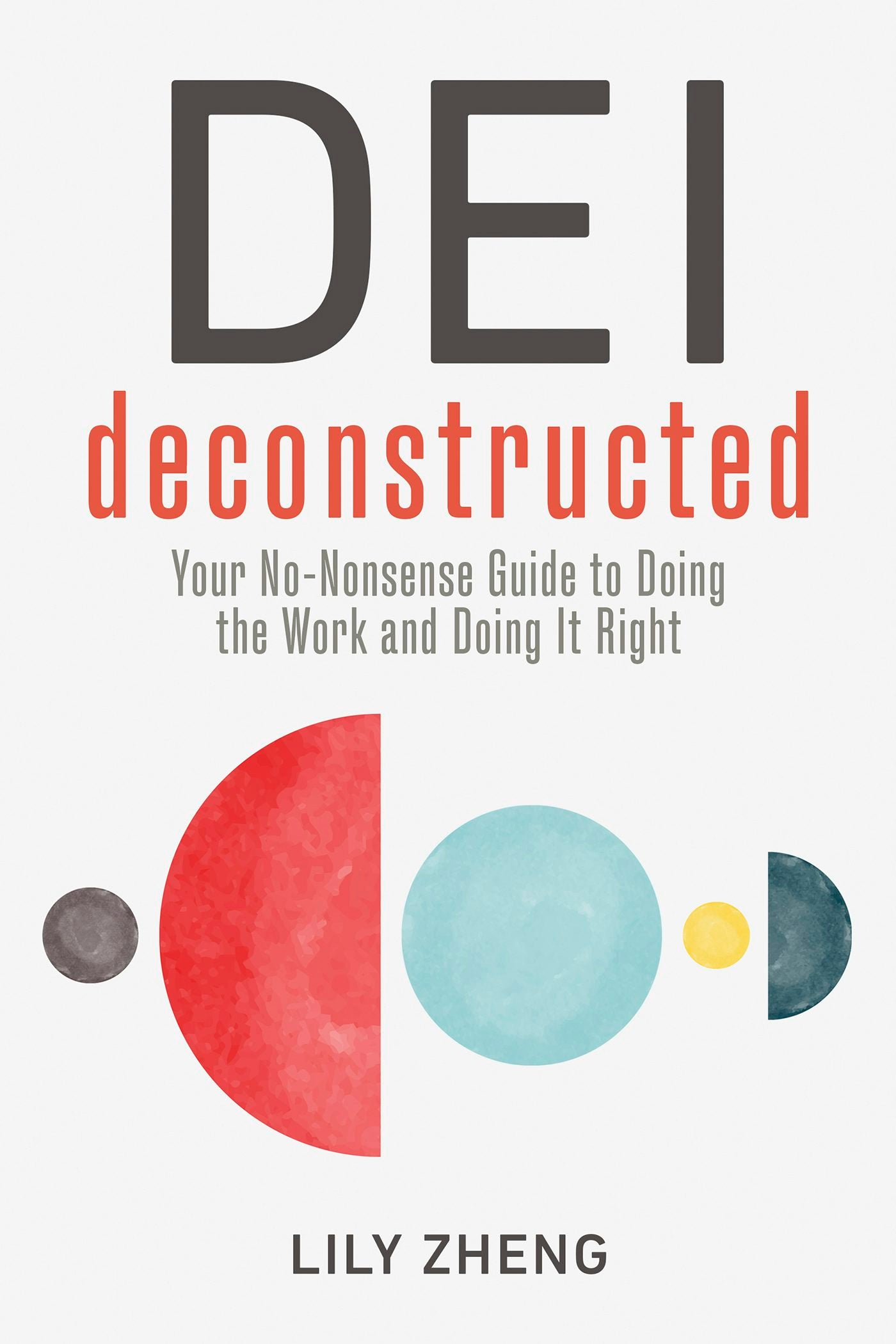
The comprehensive and foundational text for critically analyzing and applying actionable DEI techniques and strategies, written by one of LinkedIn's most popular experts on DEI.
The importance of diversity, equity, and inclusion in the workplace cannot be understated. But when half-baked and under-developed strategies are implemented, they often do more harm than good, leading the very constituents they aim to support to dismiss DEI entirely.
DEI Deconstructed analyzes how current methods and “best practices” leave marginalized people feeling frustrated and unconvinced of their leaders' sincerity, and offers a roadmap that bridges the neatness of theory with the messiness of practice. Through embracing a pragmatic DEI approach drawing from cutting-edge research on organizational change, evidence-based practices, and incisive insights from a DEI strategist with experience working from the top-down and bottom-up alike, stakeholders at every level of an organization can become effective DEI changemakers. Nothing less than this is required to scale DEI from interpersonal teeth-pulling to true systemic change.
By utilizing an outcome-oriented understanding of DEI, along with a comprehensive foundation of actionable techniques, this no-nonsense guide will lay out the path for anyone with any background to becoming a more effective DEI practitioner, ally, and leader.
The importance of diversity, equity, and inclusion in the workplace cannot be understated. But when half-baked and under-developed strategies are implemented, they often do more harm than good, leading the very constituents they aim to support to dismiss DEI entirely.
DEI Deconstructed analyzes how current methods and “best practices” leave marginalized people feeling frustrated and unconvinced of their leaders' sincerity, and offers a roadmap that bridges the neatness of theory with the messiness of practice. Through embracing a pragmatic DEI approach drawing from cutting-edge research on organizational change, evidence-based practices, and incisive insights from a DEI strategist with experience working from the top-down and bottom-up alike, stakeholders at every level of an organization can become effective DEI changemakers. Nothing less than this is required to scale DEI from interpersonal teeth-pulling to true systemic change.
By utilizing an outcome-oriented understanding of DEI, along with a comprehensive foundation of actionable techniques, this no-nonsense guide will lay out the path for anyone with any background to becoming a more effective DEI practitioner, ally, and leader.

Richard Leider and David Shapiro helped hundreds of thousands, if not millions of people discover the true purpose of their lives with their classic bestseller Repacking Your Bags. Now they focus their attention on the second half of life, showing readers how to claim their rightful place as new elders, men and women who, the authors write, "use the second half of life as an empty canvas, a blank page, a hunk of clay to be crafted on purpose."
Claiming Your Place at the Fire uses dozens of inspiring and surprising stories of new elders, as well as thought-provoking exercises like the Fireside Chats that conclude each chapter, to help readers address four key questions:
Who am I? How do I stoke the wisdom gained in the first half of my life to burn more brightly in the second half?
Where do I belong? What makes a place the right place for me in the second half?
What do I care about? Where do I want to use my gifts and talents in the second half? What is my purpose? How do I leave a legacy that has real meaning for myself and my loved ones?
What is my purpose? How do I leave a legacy that has real meaning for myself and my loved ones?
For the next 12 years, there will be 10,000 people a day in the U.S. alone turning 50. Never before have so many entered into the second half of life so vital, healthy, and free. And never before have so many had such a hunger for direction in how to live this stage of their lives in a purposeful way. Claiming Your Place at the Fire shows how to embrace the lessons that we learn as we age and share these lessons in a manner that is relevant and meaningful to ourselves and the people whose lives we touch.
Claiming Your Place at the Fire uses dozens of inspiring and surprising stories of new elders, as well as thought-provoking exercises like the Fireside Chats that conclude each chapter, to help readers address four key questions:
Who am I? How do I stoke the wisdom gained in the first half of my life to burn more brightly in the second half?
Where do I belong? What makes a place the right place for me in the second half?
What do I care about? Where do I want to use my gifts and talents in the second half? What is my purpose? How do I leave a legacy that has real meaning for myself and my loved ones?
What is my purpose? How do I leave a legacy that has real meaning for myself and my loved ones?
For the next 12 years, there will be 10,000 people a day in the U.S. alone turning 50. Never before have so many entered into the second half of life so vital, healthy, and free. And never before have so many had such a hunger for direction in how to live this stage of their lives in a purposeful way. Claiming Your Place at the Fire shows how to embrace the lessons that we learn as we age and share these lessons in a manner that is relevant and meaningful to ourselves and the people whose lives we touch.

Free yourself from self-limiting beliefs and fears that keep you stuck. This book lays out a blueprint for how to take control of your life and begin living your dreams.
We all dream. We all imagine. And we all have our vision of the good life. But why is it that 90 percent of people admit they are not living the life they've always dreamed of or imagined? What keeps us comfortable with the status quo and unable to get beyond "what if"?
In this book Dr. Shirley Davis addresses these and other questions by taking the reader on a personal journey of self-discovery, a search for significance, and an examination of the self-imposed limitations and excuses that keep us from living our dreams and performing at our best. Dr. Davis guides you through the steps she took to attack and defeat procrastination and present-bias syndrome-the mindset that causes us to focus on the here and now and overvalue immediate rewards at the expense of long-term goals and benefits. She also helps you overcome paralyzing fears that keep your dreams on pause and inspires confidence in you to jump first and grow your wings on the way down.
We all dream. We all imagine. And we all have our vision of the good life. But why is it that 90 percent of people admit they are not living the life they've always dreamed of or imagined? What keeps us comfortable with the status quo and unable to get beyond "what if"?
In this book Dr. Shirley Davis addresses these and other questions by taking the reader on a personal journey of self-discovery, a search for significance, and an examination of the self-imposed limitations and excuses that keep us from living our dreams and performing at our best. Dr. Davis guides you through the steps she took to attack and defeat procrastination and present-bias syndrome-the mindset that causes us to focus on the here and now and overvalue immediate rewards at the expense of long-term goals and benefits. She also helps you overcome paralyzing fears that keep your dreams on pause and inspires confidence in you to jump first and grow your wings on the way down.

What if you could transform your company from the inside out? Biased, male-dominated corporate cultures have forced far too many women out of the companies they've aspired to work for. Dig Your Heels In is a first of its kind playbook that empowers women to disrupt the corporate achievement game and be catalysts for positive change.
Dig Your Heels In is a playbook that empowers women to win at the corporate achievement game and be a catalyst for positive progress. It tackles the critical need to engage, advance and retain women in the workplace, for the financial success of the business and for the benefit of their women employees.
This is the first book of its kind to truly arm women to hold their ground and play the long game, staying and advancing in corporate careers. If the reader Digs Her Heels In at the company that pays her paycheck today, she can transform the company into the one that she deserves, for herself and for future generations of women entering the workforce.
Dig Your Heels In is the roadmap that shows women how increasing their breadth of experience gives them more power to identify opportunities for and effect innovative and equitable change. This book is critical for women from the entry level to the executive level. Dig Your Heels In is also a critical resource for leaders in the C-suite and those leading Human Resources, Talent Management and on the front lines of recruitment who can drive enterprise wide changes to build programs that strengthen engagement and retention. Every reader will learn the ten big bold moves to achieve the career they desire and build the company and culture they deserve.
Dig Your Heels In is a playbook that empowers women to win at the corporate achievement game and be a catalyst for positive progress. It tackles the critical need to engage, advance and retain women in the workplace, for the financial success of the business and for the benefit of their women employees.
This is the first book of its kind to truly arm women to hold their ground and play the long game, staying and advancing in corporate careers. If the reader Digs Her Heels In at the company that pays her paycheck today, she can transform the company into the one that she deserves, for herself and for future generations of women entering the workforce.
Dig Your Heels In is the roadmap that shows women how increasing their breadth of experience gives them more power to identify opportunities for and effect innovative and equitable change. This book is critical for women from the entry level to the executive level. Dig Your Heels In is also a critical resource for leaders in the C-suite and those leading Human Resources, Talent Management and on the front lines of recruitment who can drive enterprise wide changes to build programs that strengthen engagement and retention. Every reader will learn the ten big bold moves to achieve the career they desire and build the company and culture they deserve.